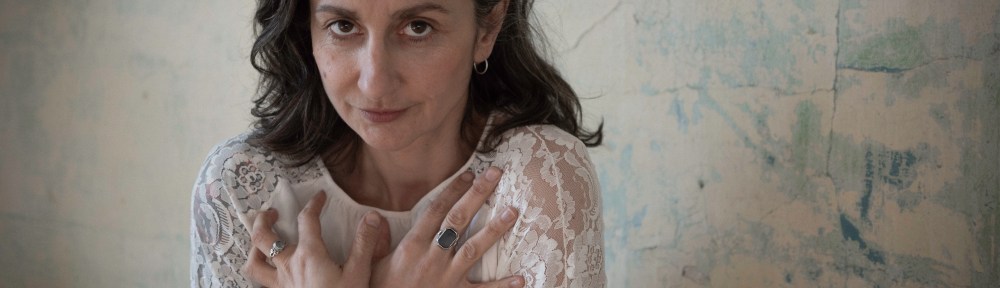
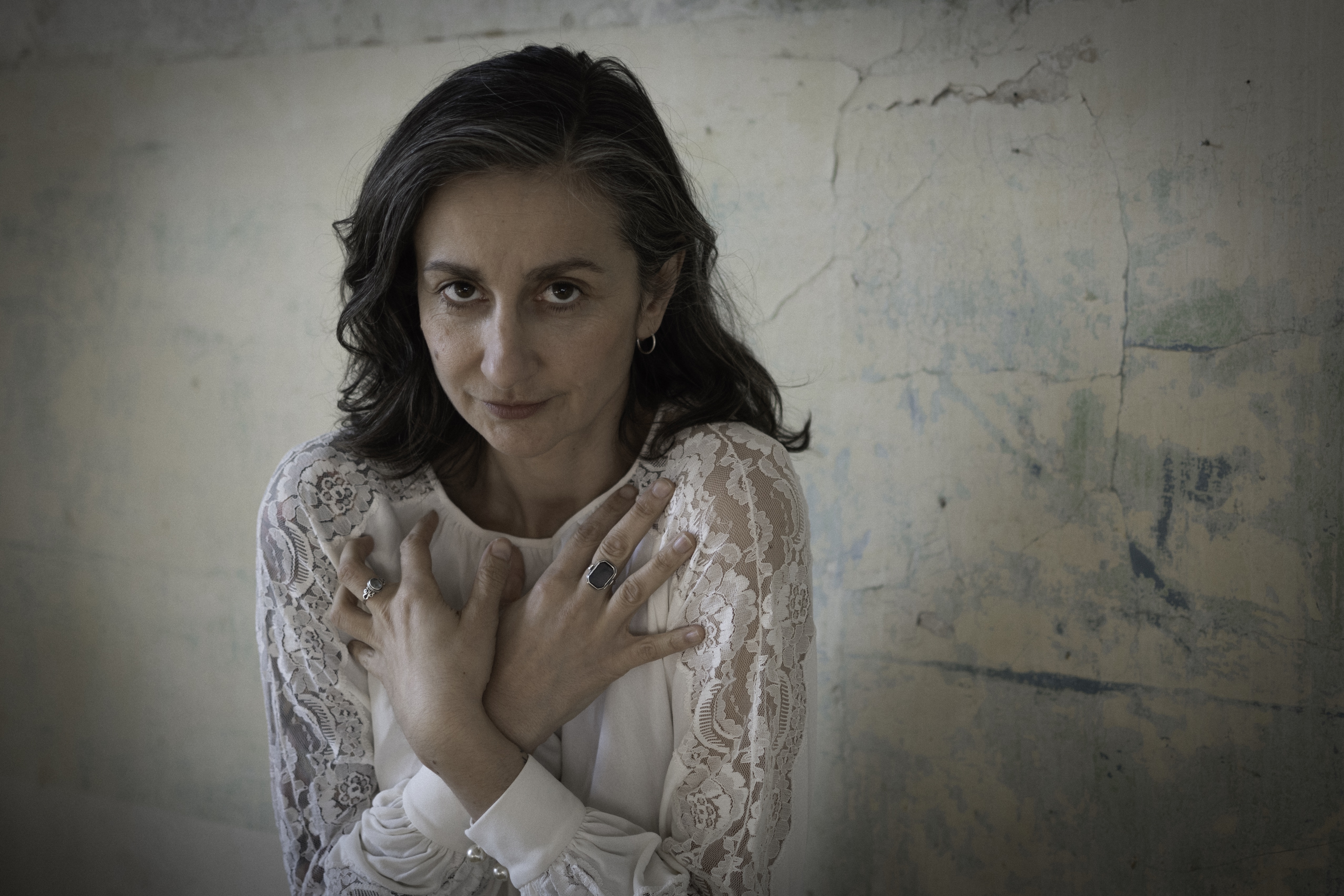
Joanna Gemma Auguri was born in Poland and moved to Paris when she was five years old and Poland was under martial law. Her family had decided to escape and their journey ended in the German town of Göttingen. At the age of sixteen she left home and moved to Hannover and Hamburg. and then to Berlin where she attended acting school. Instead of becoming an actress though, she lost her heart to music and started writing songs. In 2008 Joanna Gemma Auguri was invited to play a strange event in London. It was called “The Saddest Music in the World”. The event was a contest. A large number of artists played one song each. After the end the performances the audience had to vote, which of the songs was the saddest. Joanna liked the concept so much, that she took the event to Berlin, where she promoted it on a regular basis in the “Rote Salon” a beautiful venue in Berlins infamous theatre “Volksbühne”. Besides, she played in bands, toured al lot and worked as program director for the legendary “Bar 25” a buzzing techno hangout and creative universe for the Berlin scene. With the start of the pandemic Joanna decided, that it was time to focus on her own music. With an accordion, a zither and her unique voice she recorded 11, her first album. She self-produced everything and started her own label “Lavender Music”. The album came out in 2021. Her second album HIRAETH was released on June 28th, 2024 on Duchess Box Records from Berlin. The Welsh word describes a blend of homesickness, nostalgia and longing. One of the songs of the album features British actress and musician Keely Forsyth.
What Joanna Says: “Little Bird is the centrepiece of the album for me. I wrote it after watching a video with an Afghan girl asking if it was a sin to be a girl.In 2021, the Taliban came back to power and women were denied access to public life and education. In the wake of the murder of Jina Mahsa Amini and the subsequent protests, women’s rights and freedom of expression were restricted even more vehemently in Iran. And even in our democratic cultures, many traces of centuries of inequality, mainly instigated by the church, are still etched in our genes and evident in social life. As a child, I dreamed of the freedom of being a bird. To take to the skies and express myself freely, to be able to decide for myself how I want to shape my life. This was not. That was not a self-evident fact. Dealing with the question of what it means to be truly free stayed with me ever since.Musically, the piece expresses the contrasts between innocence and distress. Of light and shadow, which sometimes manifest themselves within us. As a composition, the piece is certainly the most unusual on the album. A tender narrative accompanied on the piano develops into a haunting catharsis, only to end in an evocative finale. “To better times”. Little Bird was recorded live in the Candybomer Studio with Achim Färber, Yoyo Röhm and Isabelle Klemmt.“
“What We Call Love deals with how the great and hopeful feelings you have for someone can suddenly turn into coldness and indifference. A painful awakening from a state of projection and dreaming. It is an inevitable fall and yet you remember the magic. I often ask myself what constitutes love in our time and our society, but also through our expectations. The song reflects the beauty and parting of intense encounters in our lives. With its beat and brass sections, the song almost sounds like a pop song. And yet the zither plays its eerie song underneath and breaks up the classical structure. The director and actress Mona Naima created a beautiful and lush video for the song. The song itself is a masterful blend of sultry tones and seductive melodies, reminiscent of the smoky vocal purrs of Portishead’s Beth Gibbons and the ethereal soundscapes of Cocteau Twins’ Elizabeth Fraser. With its jazzy undertones and a 60s vibe that harks back to the likes of Scott Walker and The Tindersticks, the track weaves a rich tapestry of sound that is both chill-inducing and romantically evocative. The piano and percussion elements, in particular, echo Fraser’s collaboration with Massive Attack, creating a mesmerizing ambiance that softly vibrates the tiny hairs up and down your arms. The accompanying video for What We Call Love is a visual feast, bathed in hues of pink and violet, with soft lighting that envelops the viewer like a cocoon of roses. As two lovers dance within this dreamy landscape, their silhouettes cast soft, intertwining shadows on the wall, embodying the song’s essence of fleeting beauty and the transient nature of love.”
“Break Out is like a prayer and a dialogue with an inner authority. With its extraordinary instrumentation, the sensual song is almost like a magic spell, evoking nothing less than
liberation. A quite dark songwriter Intro turns into a cinematic pop-song which is not afraid of
pathos and deep emotions. “Sometimes it takes a strong push from the outside to leave a
familiar orbit.” Sometimes you are trapped in eternal circles of thought or behaviour in life that lead you to the same limits again and again. Recognising this may be painful and lengthy, but it is worthwhile in order to grow beyond yourself. “Let me overcome the borders of myself! Let me break out out of her””
“Keely Forsyth and I met in a tiny backstage area at Zemlika, a lovingly curated avant-garde festival in the Latvian countryside, where we both performed in 2022. The affinity for each other was immediate, as was the obvious overlap in melancholy and intimacy in musical preferences. We stayed in touch. Last summer I asked her and her partner Ross Downes to
join me on a song for the record and I’m really pleased with the result – it reminds me of a
kind of eerie nursery rhyme.“
Her Mixtape:
KEELEY FORSYTH – The Hollow
Keeley Forsyths new work just gives me goosebumbs. I am always impressed by her
compositions. Her lyrics and her voice hit me at my core. The piece is excellent in its purism
and the vastness of it. I am so happy about our collaboration on the new album.
ANIQO – Vivre Libre
This song by my friend Aniqo is very uplifting and powerful. I love the way she sings so freely. A declaration of love for life and creativity.
LANKUM – The Wild Rover
I really like the song for the way it creates tradition and a new take on folklore. The harmonies and the instrumentation are just perfect. Lankum is definitely one of the most exciting new bands of the moment who manage this balancing act.
JEFF BUCKLEY & ELISABETH FRASER – All flowers in time bend towards the sun
This piece always cheers me up when I am really down. It’s such an honest and simply beautiful song. It’s interesting that it was a spontaneous studio recording that Liz Fraser wasn’t happy with. But I find this imperfection so wonderful.
BETH GIBBONS / PENDERECKI / GÓRECKI – Symphony No.3 Final Movemen
Listening to this makes me cry – and not just a little. It’s sobbing into the pillow and being
crushed by the beauty and despair of being human. I was really impressed with Beth Gibbons for singing the Slesian text so well. The piece was the biggest inspiration for Hiraeth for me.
HEKLA – The Hole feat. Ótarr Proppé
The piece is so otherworldly and touching. A melancholy that I simply love. Hekla mainly plays theremin and I don’t think there is a more spherical instrument out in the world.
The Album
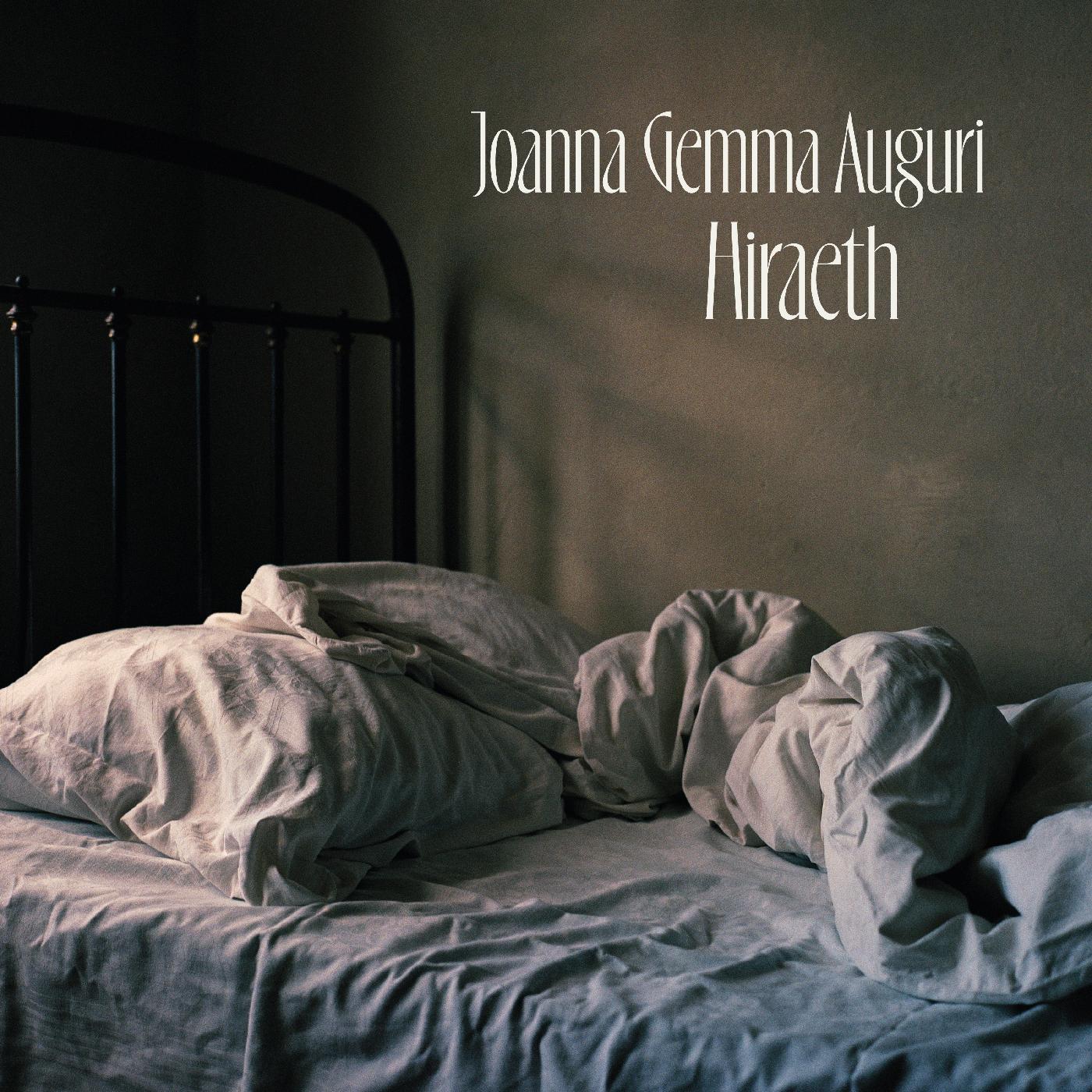
What Joanna Says about Hiraeth: “Hiraeth is an untranslatable word for a place or something past that we have lost or that perhaps never existed. It is homesickness, nostalgia and melancholy. I didn’t realise until after I’d finished recording that for me, the album is a longing for integrity and innocence in a world that’s out of balance. It is not only a longing for a lost past but also for a contemporary Utopia. Musically, we move through different landscapes. From sparse and intimate compositions to cinematic soundscapes. Hiraeth is a step to a broader screen. I composed all the songs with my accordion and zither, just like I did on my first album. Then we went into the studio with different musicians and a choir and created this whole new universe. I was supported by musicians such as Achim Färber (Tito & Tarantula, Automat, Philip Boa etc.), Yoyo Röhm (Ben Becker, Mick Harvey Band, The Bad Seeds) and Isabelle Klemt (Solistenensemble Kaleidoskop, Agnes Obel, The Notwist). I had the honour of conducting these wonderful musicians with the support of Ingo Krauss as sound engineer. It was a constructive and focussed collaboration and fantastic to see how a timeless sound unfolded. For me, this album is home, comfort and sensuality. It is an attempt to keep what is good in this world, even though paradise seems lost.“
Hiraeth is out tomorrow, on Duchess Box Records. Look HERE for more information on Joanna Gemma Auguri.
 Indie Sunset in Rome